Wear it different!

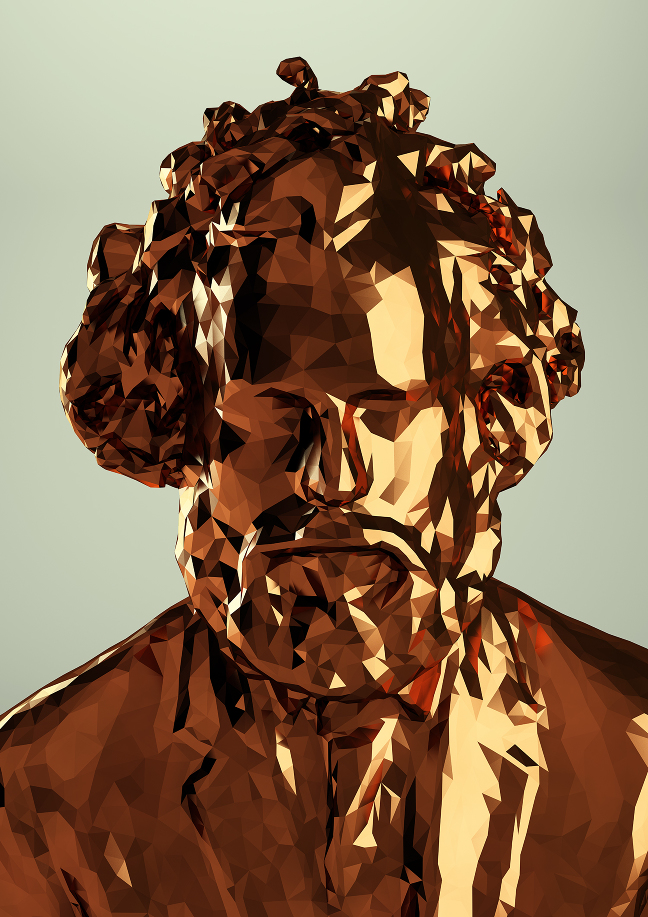
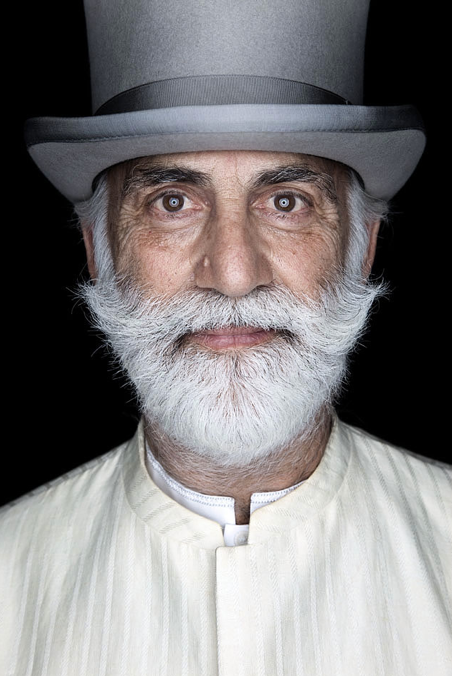
Matthew Rainwaters was born and raised in the San Fernando Valley, which is the part of Los Angeles nobody likes to talk about. and made this series called  Beardfolio

He traveled to Anchorage in May of ’09 and he photographed everyone as they were done competing. Everything was shot in one day but took months to edit through. I probably have about 85 portraits that I really think are great and maybe an additional 200 that are still sitting unretouched on my hard drive’.

JUST LOVELY… AND SO INDIVIDUAL

old fashioned and cutting edge at the same time

“The Fantastic Flying Books of Mr. Morris Lessmore” is one of five animated short films that will be considered for outstanding film achievements of 2011 in the 84th Academy Awards ®.

Even the animation is digital, everything what is said, shown in the animation is more ” analog” because in my eyes the story is about the beauty of books and how they are born, raised and what happens to people who do not read and so much more…

well done by the animation studio Moonbot and a production by William Joyce and director Brandon Oldenburg

Inspired, in equal measures, by Hurricane Katrina, Buster Keaton, The Wizard of Oz, and a love for books, “Morris Lessmore” is a story of people who devote their lives to books and books who return the favor. Morris Lessmore is a poignant, humorous allegory about the curative powers of story. “Morris Lessmore” is old-fashioned and cutting edge at the same time.

I wish the team all the best and I have to look for the other four animation to make myself a broader overview.

wooden mosaic


Haroshi makes his art pieces recycling old used skateboards. His creations are born through styles such as wooden mosaic, dots, and pixels; where each element, either cut out in different shapes or kept in their original form, are connected in different styles, and shaven into the form of the final art piece. Haroshi became infatuated with skateboarding in his early teens, and is still a passionate skater at present.

To Haroshi, his art pieces are equal to his skateboards, and that means they are his life itself. They’re his communication tool with both himself, and the outside world.

Playful – couleurful

into time .org is a new piece by Rafaël Rozendaal. When you click on his site, you can play around with the screen, which is diving in a 45° direction every time you click. Wonderful couleurful work!  (via today and tomorrow)

skeletons which are able to walk on the wind

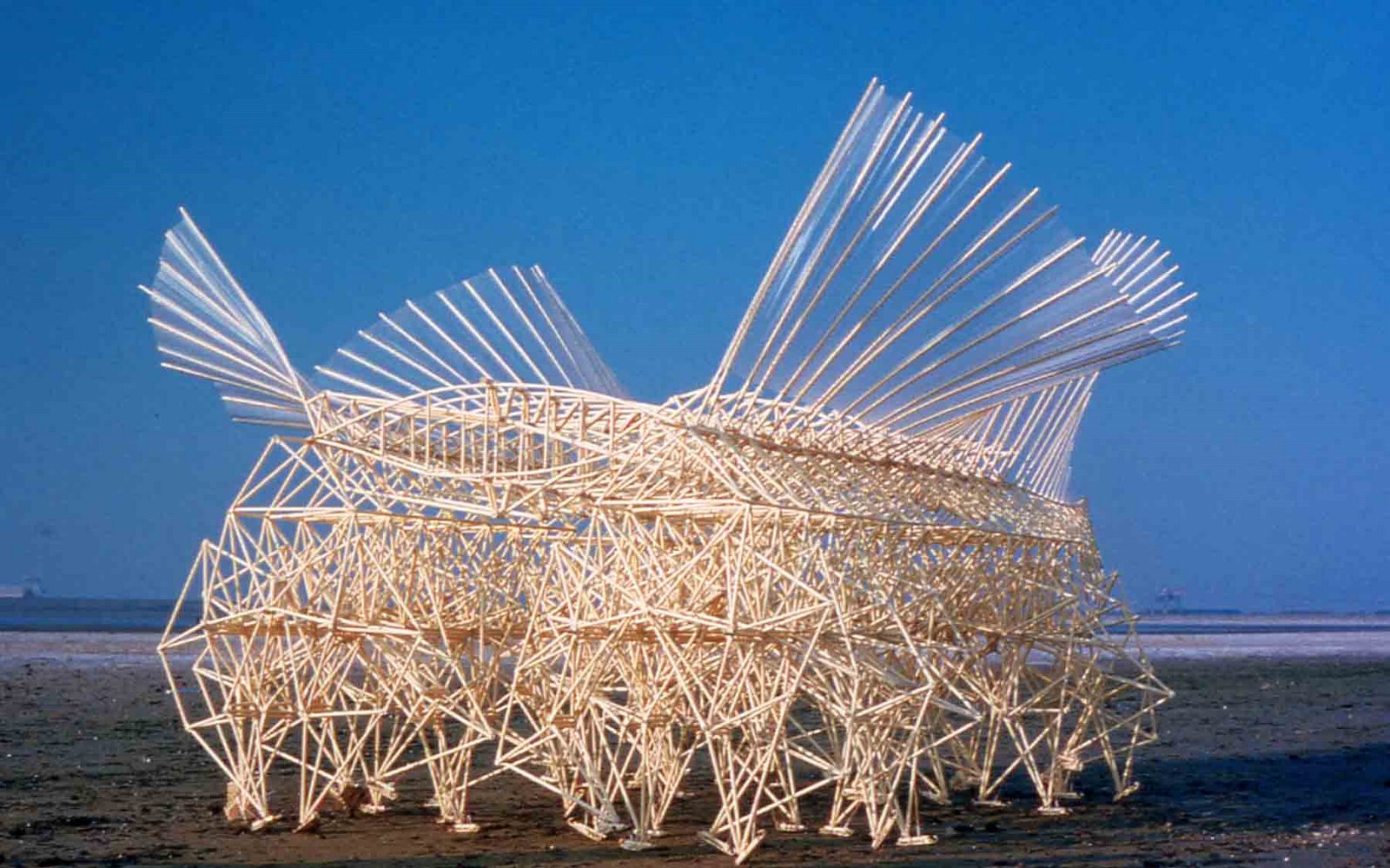
Theo Janssen  is a Dutch artist and kinetic sculptor. He builds large works which resemble skeletons of animals, that are able to walk using wind power on the beaches of the Netherlands. His animated works are a fusion of art and engineering.

“He has been creating wind-walking examples of artificial life since 1990. What was at first a rudimentary breed has slowly evolved into a generation of machines that are able to react to their environment: “over time, these skeletons have become increasingly better at surviving the elements such as storms and water, and eventually I want to put these animals out in herds on the beaches, so they will live their own lives.”

In the below video Artist Theo Jansen demonstrates the amazingly lifelike kinetic sculptures he builds from plastic tubes and lemonade bottles. His creatures are designed to move — and even survive — on their own.


play to stay creative

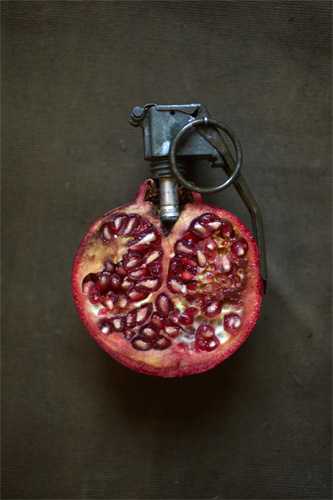
German visual artist  Sarah Illenberger  chooses familiar motifs and objects, and recreates them using fruits and vegetables and everything that seems to be practical in her eyes. The result is a visually couleurful display of images that’s creative and fun to look at. Transforming a watermelon into a cloud raining seeds and others examples you can see are her simplistic approach that truly says that less is more.

Sarah Illenberger’s visual language is extremely effective at translating content, data, and ideas into vivid, often humorous images. Whether big or small, abstract or complex, the subjects and problems of our times are pointedly depicted by this renowned illustrator and designer in concise visual forms.”


dotted porcelain

Singaporean design studio hans tan studio has developed ‘spotted nyonya‘, an industrial re-interpretation of the nyonya porcelain vessels which are traditional domestic wares native to chinese-peranakans in south asia. Produced in collaboration with Singaporean creative agency FARM, this contemporary take on the traditional objects transforms the original multicolored surface treatment into a new dotted pattern. the limited edition series of vessels utilizes the resist-dyeing technique that is often applied to dye fabric patterns. hans tan masks the porcelain pieces  with the new dotted motif, which is then sandblasted, so that the areas protected are preserved, while the original glazed sections of the exposed areas are erased, revealing the white porcelain which lies beneath. ( via designboom)

Cool new invention and innovation. So if you get bored of old ceramics , you can recreated them now by sandblasting.


subconscious effect of daylight

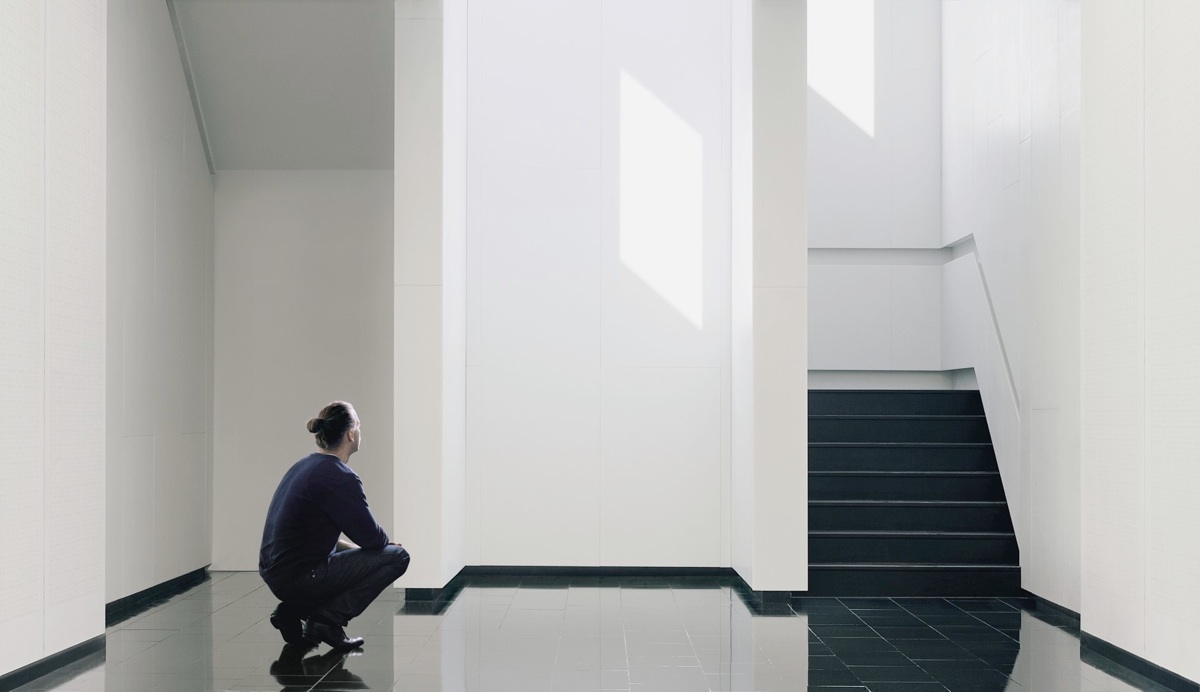
It looks like a room where daylight is falling on the walls, but it is not!

Norwegian designer Daniel Rybakken’s intention was with this project to take elements of his work and theories concerning daylight and incorporate them directly into architecture. The installation is located in the entrance of an office building in Stockholm. As both the entrance and staircase have no natural light, it was important for him, to replicate the positive sensation of sunlight. The installation consists of over 6000 LEDs.

“ When you have daylight in a room you get information of something outside. This creates a feeling of an expanded perceived space. A sensation of freedom” a phrase by Daniel Rybakken.

His work seems and is so quiet, because at first sight everything looks normal and only after a second look you see the optical illusion. LOVE IT! His earlier work has also a wonderful name ” subconscious effect of daylight”. For sure his idea is going to be useful for underground stations, cellar apartments and every other dark room and especially for the grey Berlin times which starts now.

new forms in paper

Today I was looking through random magazines in an art & design bookstore and suddenly had a graphic magazine in my hand, where first of all I liked a lot the front graphic. Couleurful, triangular-shaped patterns! But the moment I flipped the first page of the november issue from “Novum-world of graphic design” , I was astonished that the paper where cut and you could move and play with the front page. It was like having an interesting object in your hand and not anymore a plain high-clossy paper. great idea, well done!


Well after my research I know even more. The Idea is coming from the Hamburg based creative studio Paperlux.  It is a  joint project of Paperlux (conception, creation), the printarena (printingand punching), Jürgen Jeurink (punch from) and the EMAG GmbH paper finishing (lamination). But more about the printing process you see below in the well-done short video.

Provided in 48 000 print passes and with 140 punch cuts per issue, six different colored covers created without re-exposure plate. The result? A cover that can be shaped into geometric three-dimensional figures, and thus invites to play.

PS: Paperlux is a great design agency! great ideas!

simplicity in jewelry

I have been in London for a couple of days and while I was walking through the gorgeous V&A museum I discovered this wonderful jewelry designer. David Watkins‘s jewelry is described as architectural and minimalist- two parts I really like a lot.  It is  graphic, spare and clearly about the spaces between. It ranges in form from huge, flat, coloured plastic circles to gold wire square grids and looks more like 2D sculpture than jewellery. Much of it appears almost impossible to wear; yet as one of Watkins’ key preoccupations is how jewelry works on the body, it isn’t. As Watkins is concerned with both the wearer and the viewer, its purpose is to frame or be framed by the body.

Watkins began his career as a jazz musician and a sculptor, working on Stanley Kubrick’s 2001: A Space Odyssey in 1968, all of which seems to have influenced his later creations. He was first attracted to jewellery in the early Seventies when modern jewelers were more preoccupied with skill than radical ideas. Taking an unorthodox approach to the craft, Watkins’ view of jewellery is as wearable, miniature sculpture, rather than precious ornament.

Watkins has led the way in exploring such non-precious materials as paper, acrylic, neoprene, colorcore, steel and aluminium. Some of his pieces making a cross between pharaonic and art deco aesthetics and postmodern iconography.

He was one of the first jewellery designers to use a computer, appreciating early on that he needed to do so to inform himself of the possibilities and explore their full potential. His work, which involves the repetition of forms, has been facilitated (or indeed made possible at all) by 3D computer modelling and CNC machining. Even after retiring as professor and head of goldsmithing, silversmithing, metalwork and jewellery at the RCA he continues to investigate new materials and processes and has been immensely influential to a generation of students.

He explores classical proportions, basing his work largely on the circle, in any material, or its components. Bizarrely his basic forms are reflected in the hugely ornate ceiling of the Silver Galleries, where his work is displayed in an exhibition he himself designed. It fights hard to compete with the excesses of its surroundings.

When some of his early pieces were included in a 1975 show at the V&A, Watkins said he felt as if he had ‘transgressed’. This show of one of the pioneers of contemporary jewellery started off in the Ruthin Craft Centre in Wales and is long overdue at the V&A. The transgression is the V&A’s in not inviting him back for a retrospective much sooner. With bold and varied displays, though, this show makes amends. ( via Blueprint)

genius


Edouard Martinet transforms everyday objects found in flea-markets and car boot sales into works of art. Working with a variety of refuse materials such as rusted kitchen pans, typewriter keys, car lights and other scrap metals, Edouard Martinet sculpts several types of animals and insects. His sculptures are made without the use of solder. He fits each component into place as if putting together a puzzle of random pieces and parts. Each masterpiece is carefully assembled after having drafted several detailed sketches. This process requires a sufficient amount of time to get from the idea to the completion.

wonderful things, amazing!

let the wind move through those sculptures

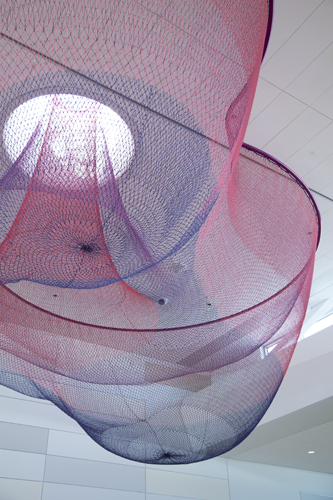
Janet Echelman builds living, breathing sculpture environments that respond to the forces of nature — wind, water and light— and become inviting focal points for civic life.

Exploring the potential of unlikely materials, from fishing net to atomized water particles, Echelman combines ancient craft with cutting-edge technology to create her permanent sculpture at the scale of buildings. Experiential in nature, the result is sculpture that shifts from being an object you look at, to something you can get lost in.

American artist Janet Echelman reshapes urban airspace with monumental, fluidly moving sculpture that responds to environmental forces including wind, water, and sunlight ( via TED)


post-it madness


I do not need lots of words for this posts. You can see the incredible work!

Much in the spirit of the high design collaborations that plastic footwear maker Melissa has become known for in recent years, Galeria Melissa, their flagship São Paulo store was designed to be constantly updated with new graphics both on the exterior facade and on interior walls every three months. (via cool hunting)

that’s a cool concept store idea!

seefashion11


The definitely most creative  fashion and art school in Berlin Kunsthochschule Berlin-Weissensee will have on Friday, the 8. July 2011 their fashion show at Haus der Kulturen der Welt. I am really looking forward to see my colleagues doing a great job. It is held at this interesting place at 4.30pm and at 7.00 pm .  Music will be done by the experimental french composer Francois Regis. 

The number of innovative designers graduated there ( C.neeonPerretSchaad, Sadak, Schmidttakahashi, Rike Fischer , Parsival Cserer, Michael Sontag, Concis, among lots of others….) and having national and international success are rising and for sure this show will show that there is a huge range of fashion creativity among the students showing their collections. For the fifth time this event is held during Berlin Fashion Week.

Come and see ” seefashion11“!

Haus der Kulturen der Welt
John-Foster-Dulles-Allee 10
 10557 Berlin
16:30 Uhr and 19:00 Uhr